
Work
Research on Integrated Township
Extensive empirical research for the physical space – covering “place as an experience and a product”
Background
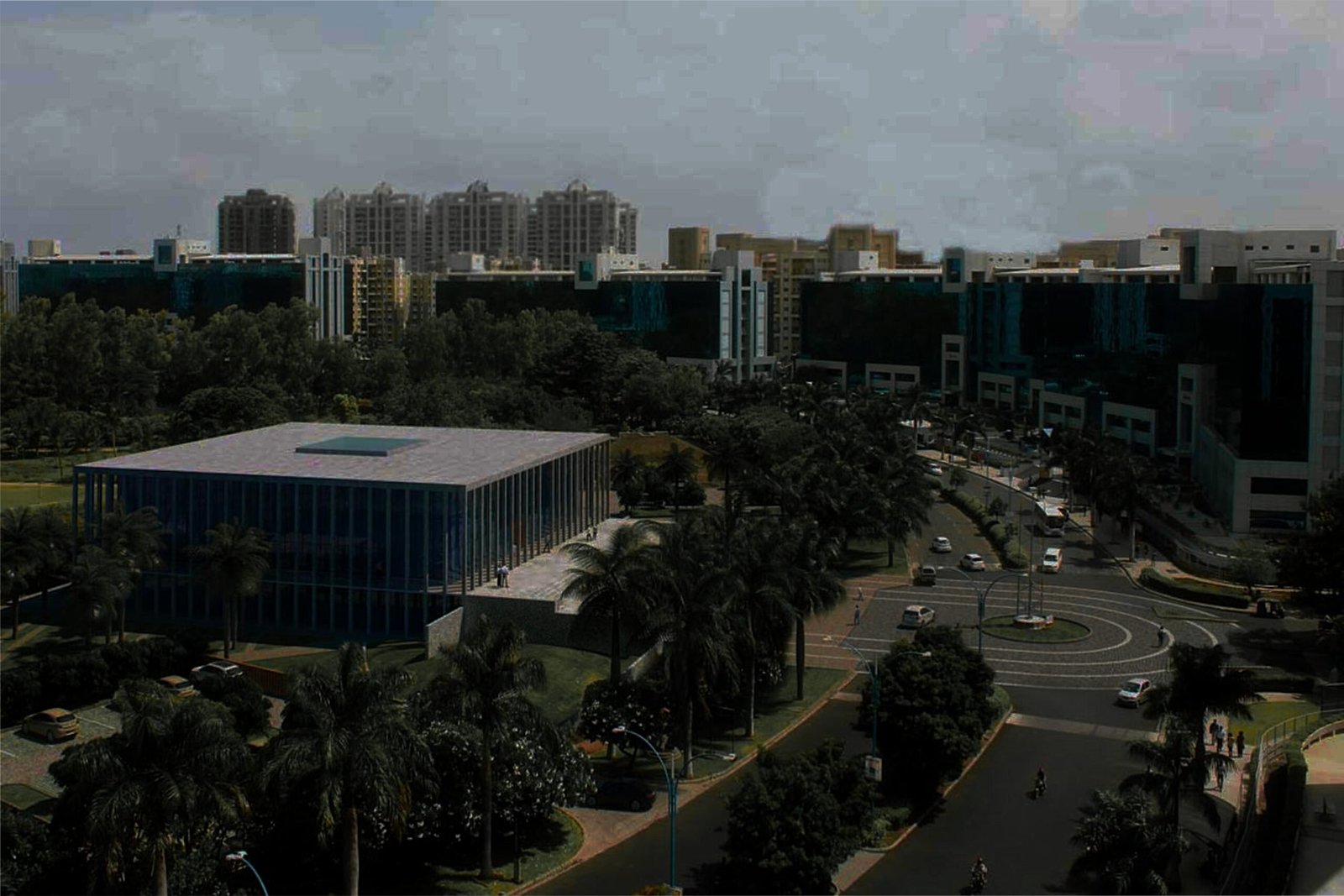
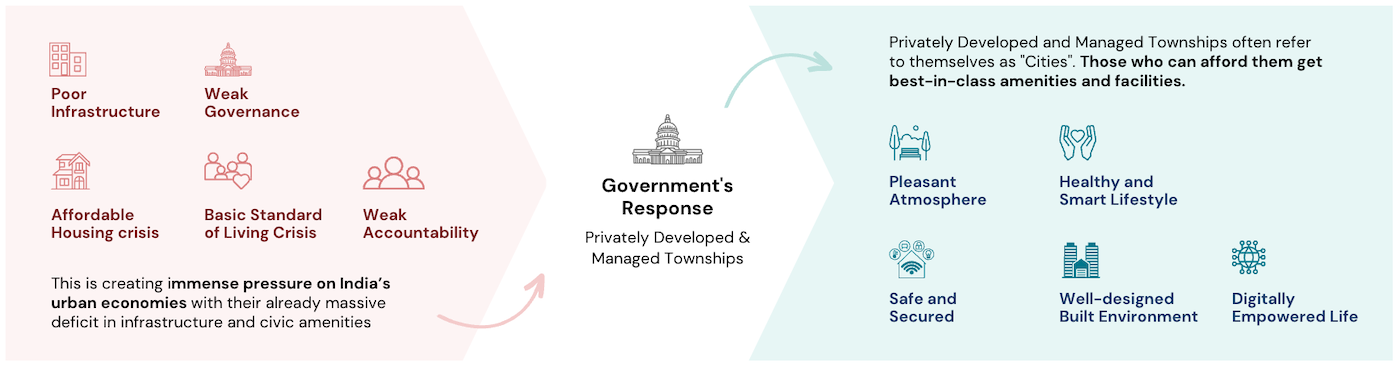
India’s rapid urbanisation due to its second-largest population is leading to significant restructuring in urban growth, which will likely impact the development of urban regimes. As urbanisation continues to shape the real estate industry and lead to the privatisation of the mass housing sector, some states such as Maharashtra and Gujarat are adopting the Integrated Township approach. Additionally, there is a growing focus on aestheticising urban space and lifestyle by developing available land on the outskirts of old metropolises for residential, leisure, and business purposes.
Problem Statement
New urban living forms such as privately developed and managed integrated townships are transforming Indian cities and causing social divisions. These settlements offer amenities such as public goods, schools, and hospitals within a limited boundary, leading to questions about whether they represent a city or a different form of urban living. This study aimed to understand the emergence of integrated townships and their privatisation in India, analysing the driving forces behind this new urban form and relating it to the global phenomenon of gated communities.
Key Research Questions
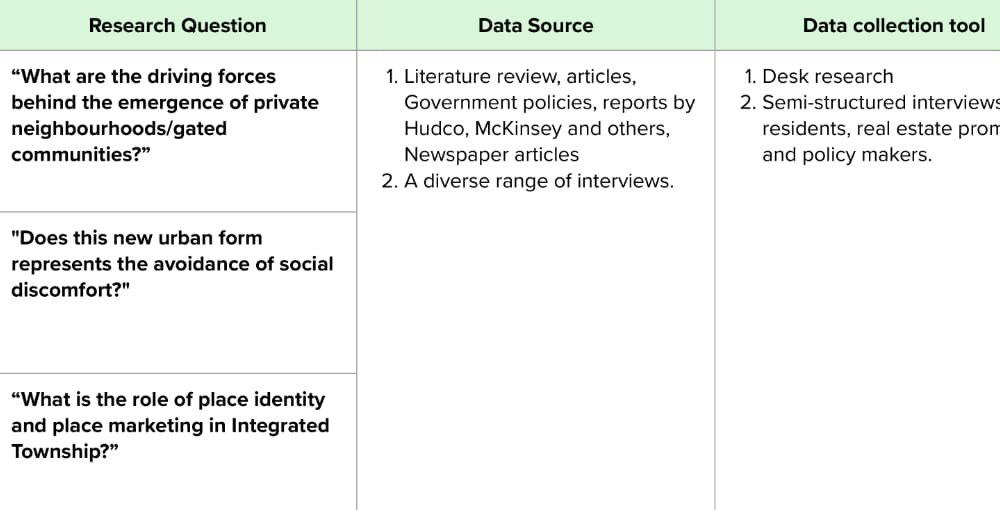
After the initial literature review and rigorous discussions with mentors, I came up with three main research questions. The driving force behind Privately developed and managed integrated townships and its impact on the socio-spatial structure was significant for this study. As the location of these townships was at the periphery of the city, deeper dive into the literature brought the third equally important question, which dealt with Place Identity and Marketing’s role in making these settlements.
Driving Forces
- What are the driving forces behind the emergence of private neighbourhoods/gated communities?
Impacts
- Does this new urban form represent the avoidance of social discomfort?
Place Identity and Marketing
- What is the role of place identity and place marketing in Integrated Township?
Research Methods and Process
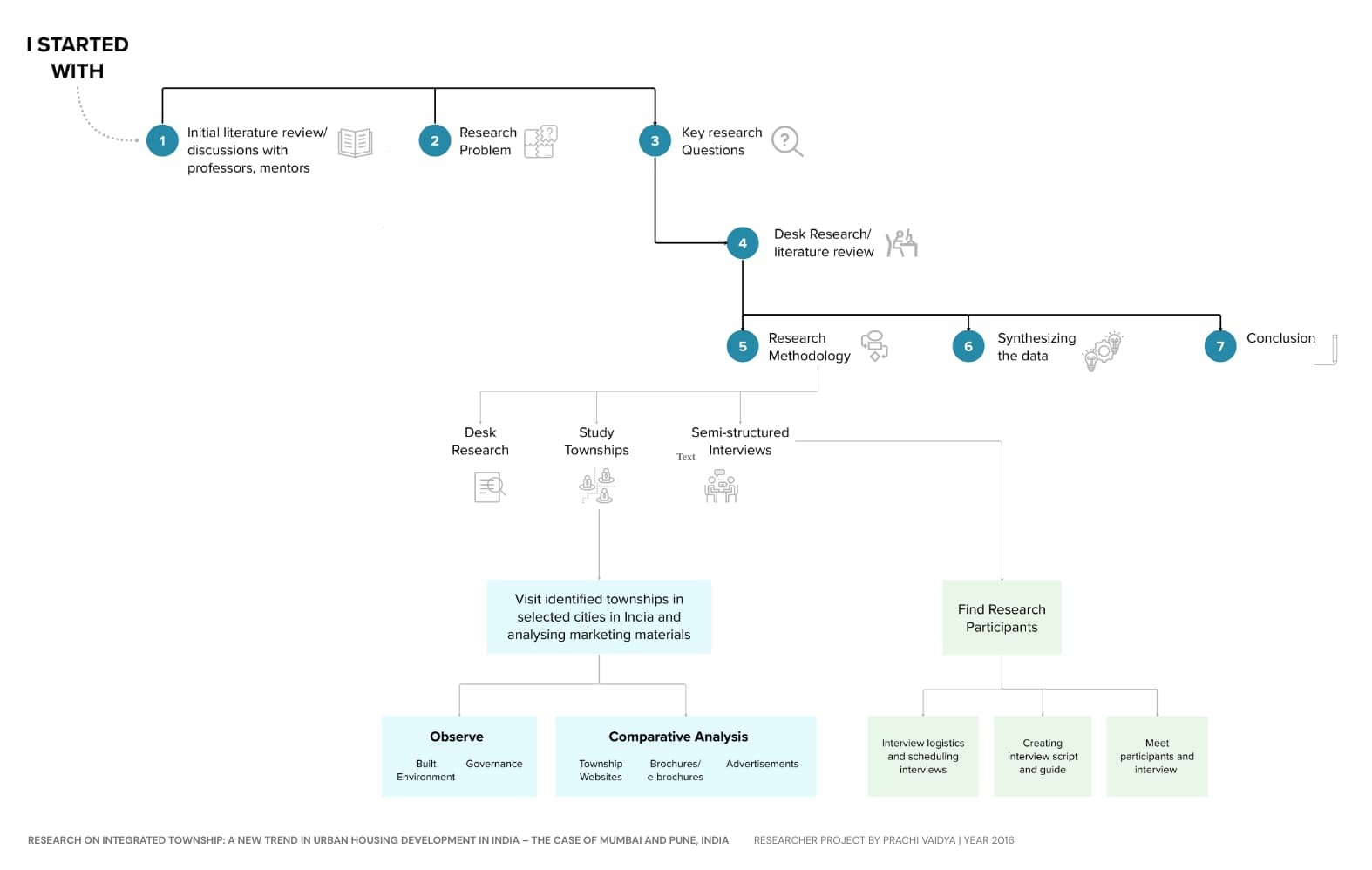
My research focused on the emergence of gated integrated townships in India, their driving factors, physical-social experiences and the way people relate their identity with the place they live in. I used mixed methods, including theoretical knowledge, interviews and a physical survey of four townships, to gather data. This approach provided valuable insights into the socio-spatial structure of these townships and their potential impacts on the surrounding city and citizens.
Desk Research
The literature review sets the context and frames the research questions. Given table identifies the various data sources and required data collection tools.
Study of Integrated Townships
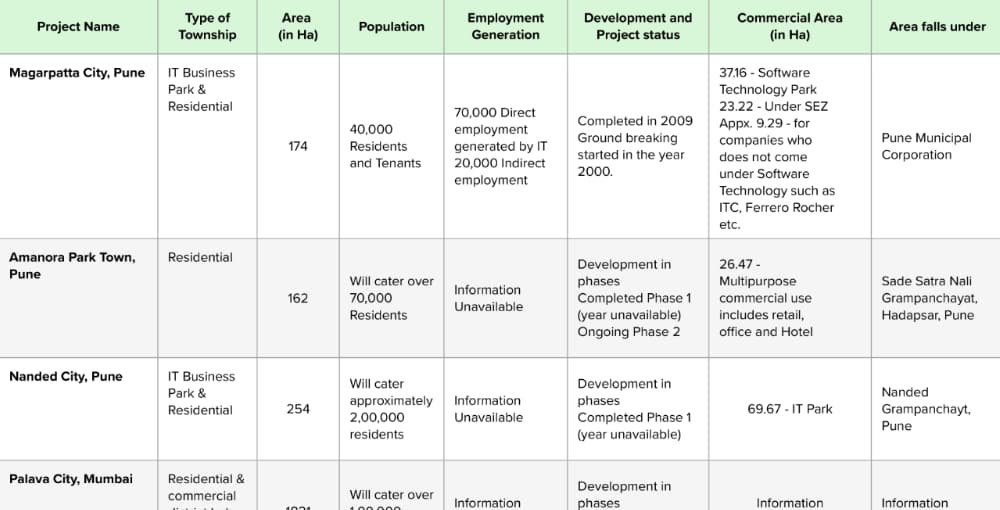
After conducting desk research, I visited four integrated townships in India, located in Mumbai and Pune, and observed their infrastructure, management systems, security measures, social environment, and surrounding built environment. Additionally, I conducted a comparative analysis of marketing materials such as websites, brochures, and e-brochures, along with semi-structured interviews, to identify gaps between marketed material and reality.
Semi-structured interviews
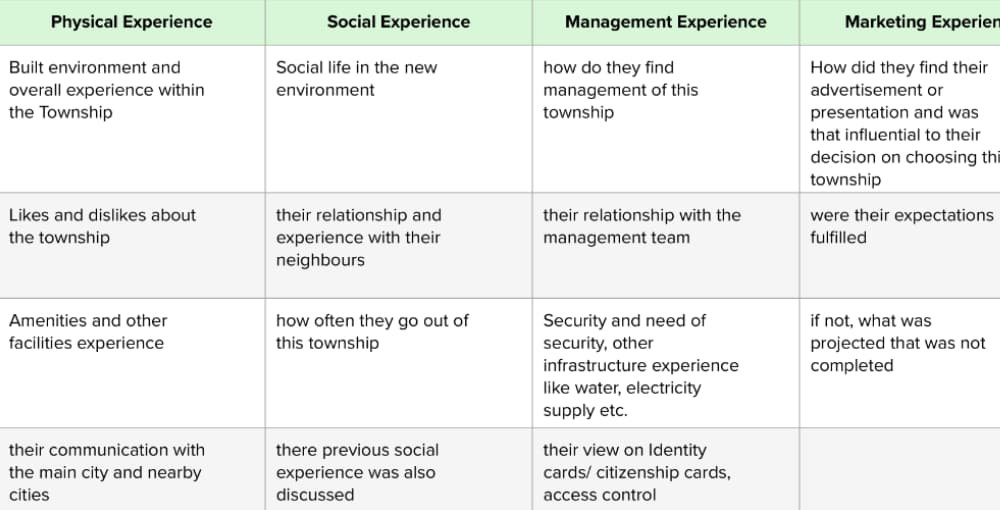
The interview process involved 30 people. A diverse range of people was contacted for the interview, including apartment owners and investors, tenants, non-residents, land owners and farmers, marketing heads, architects and designers. Following was the framework for the semi-structured interviews.
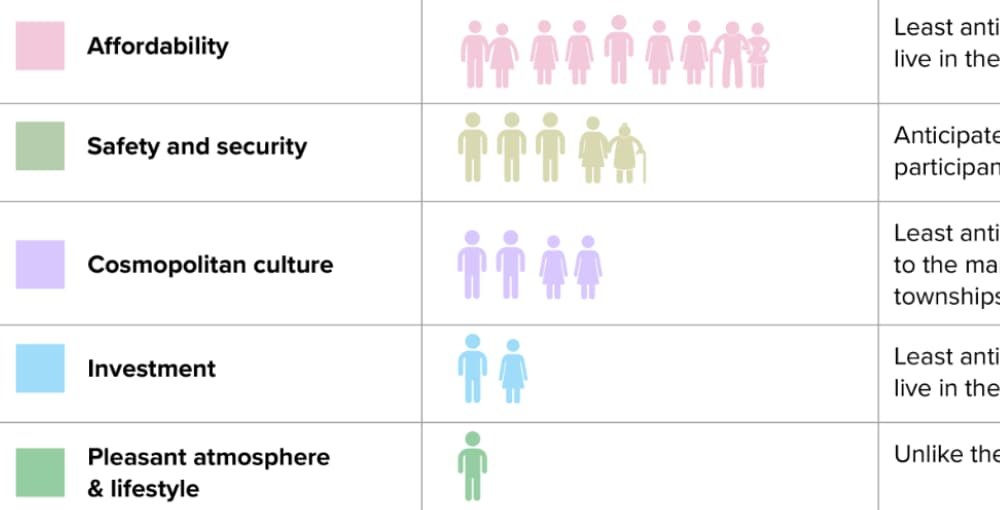
Key Findings
Place as an “Experience”
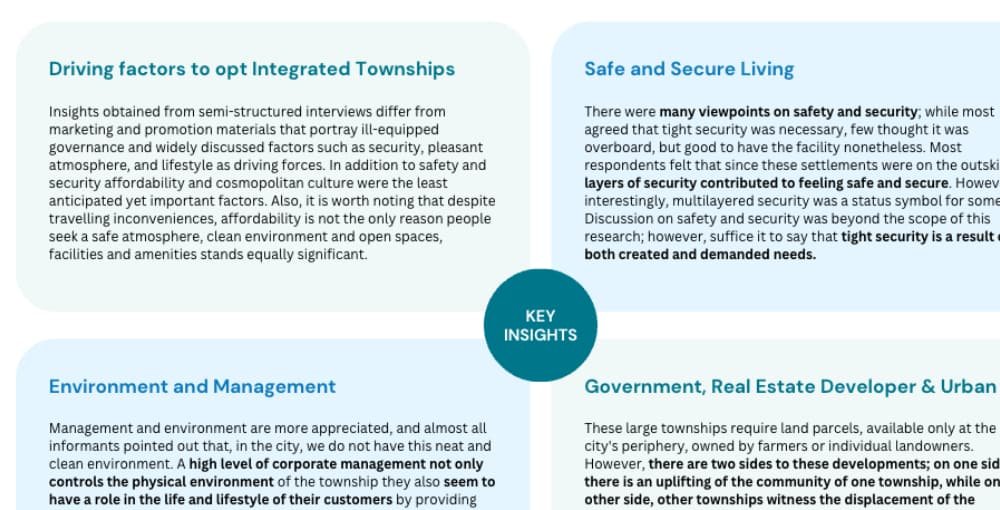
After conducting physical surveys and interviews with residents, tenants, planners, and promoters of the townships, as well as non-residents living nearby, it became apparent that these highly secure and well-designed townships were inward-focused, with poor connecting infrastructure outside.
Respondent’s desire for socio-spatial segregation and a preference to sharing the settlement only with those matching their economic status highlighted the economically driven strategies of the developers.
Place as a “Product” – Marketing Trend
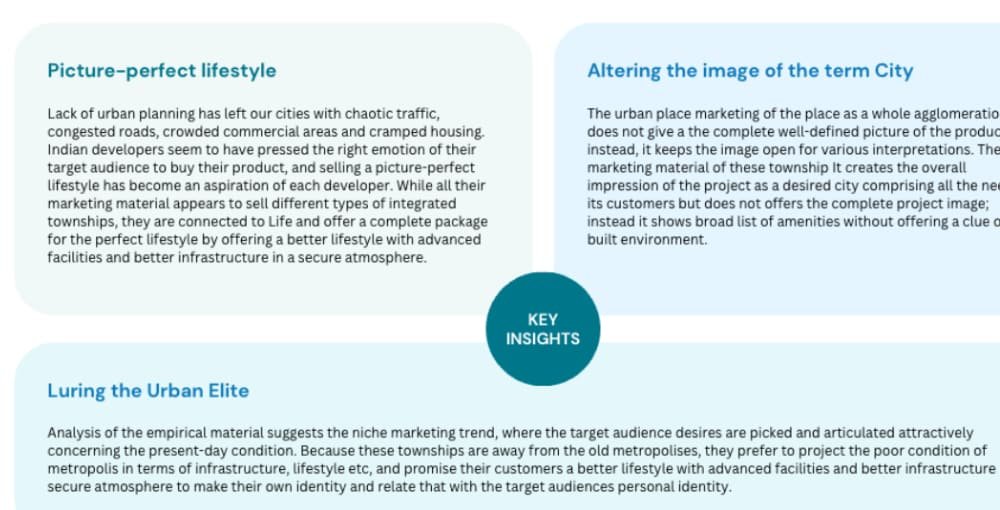
Analysis of these settlements highlighted the evidence of aggressive competition between each township to market itself as a complete lifestyle package with best-in-class infrastructure and a safe, secured, and digitally empowered environment targeting the new working class and premium segment of society.
The townships were planned and designed by foreign architects to match the standards of global cities, resulting in cosmopolitan settlements yet irrelevant and disconnected from the surrounding context. The cost of living within these townships is distinctly aimed at the new working class and premium segments of society.
Pros, Cons and Key Concerns
Privately Developed and Managed Integrated Townships
Pros
- Rise in Housing Stock
- Better standard of living within
- Upliftment of communities in some cases
- The good environment within the Township
Cons
- Inward oriented approach
- Does not represent the majority of the cities population
- Banish Nature
- Displacement of the original community in most cases
- Increase in informal settlements at the periphery
Key Concerns
- Do these Economically driven settlements cause the Increase in socio-spatial segregation?
- Will limiting periphery & controlled influx help society to grow?
- Does this indicate a rise in parallel Lifestyle and parallel Governance?
- Does this represent a Two Taled Society?
Conclusion
The study analyzed the emergence and privatization of integrated townships and their socio-spatial impact on cities and citizens.
Desk research, physical surveys, and interviews revealed that politicians, landowners, real estate developers, and the consumer class shape urban growth in India. The rise of the new working class and their preference for aestheticized everyday life highlights the weak governance, which forces them to choose private governance.
Each township is seen as a city, but this raises concerns about the definition of a city. Are these townships redefining the term “city”? Has a new “middle-class walled city” been born by controlling the influx and limiting the periphery?
Related keywords:
Empirical Research, Qualitative Research, Field Study, Semi-structured interviews, Comparative analysis, Place identity, Place Marketing, City, Integrated Township, Privately developed and managed, Affordable Housing, Real-estate industry, Urban Design, Physical Space Design, Place as an Experience, Place as a Product